

Lupus and Heart Health: Understanding Cardiovascular Risk in SLE
Lupus and heart health are closely connected. Systemic lupus erythematosus (SLE) is a chronic autoimmune disease that can affect major organs throughout the body, including the heart and blood vessels.
People living with lupus face a five to six times higher risk of cardiovascular disease compared to individuals without lupus. This includes an increased risk of coronary artery disease, heart attack, and stroke.
Understanding this risk and taking preventive action can help protect long term heart health and reduce avoidable complications.
For a comprehensive clinical overview of cardiovascular disease and lupus, including warning signs and emergency symptoms, visit our Cardiovascular Disease and Lupus resource.
Why Lupus Increases Cardiovascular Risk
It is still not fully understood why lupus increases cardiovascular risk, but research provides important insights.
In lupus, the immune system is overactive, leading to chronic inflammation throughout the body. Over time, this inflammation can damage blood vessels and accelerate atherosclerosis — a process where plaque builds up along artery walls, narrowing them and restricting blood flow.
People with lupus may also experience:
• Differences in lipid levels
• Increased platelet activity leading to clot formation
• Higher disease activity linked to increased risk
• Long term use of certain medications that may influence cardiovascular risk
At the same time, some medications such as hydroxychloroquine have been associated with protective cardiovascular effects.
Because lupus is a lifelong condition, cardiovascular risk can increase over time. This makes prevention and monitoring especially important.
Protecting Your Heart Health
There are practical steps you can take to reduce cardiovascular risk while living with lupus.
Manage Your Lupus
Follow your treatment plan to help control inflammation and disease activity.
Stop Smoking
Smoking is a significant cardiovascular risk factor, particularly for people living with lupus. Quitting smoking is one of the most important steps you can take for your heart health.
Limit Alcohol
Alcohol can increase blood pressure. Follow recommended limits and speak with your healthcare provider about what is appropriate for you.
Eat Heart Healthy Foods
Focus on fresh fruits and vegetables, fibre rich foods, and limit saturated fats, trans fats, processed sugars, and cholesterol.
Stay Physically Active
Aim for approximately 2 hours and 30 minutes of moderate exercise per week. Activities may include walking, swimming, stretching, or yoga.
Even small amounts of daily movement can have meaningful benefits. Listen to your body and adjust activity during flares.
Reduce Stress
Chronic stress can affect both lupus disease activity and cardiovascular health. Mindfulness, relaxation techniques, counselling, and structured stress management strategies may help.
Know Your Risk
Ask your healthcare provider about regular monitoring of:
- Blood pressure
- Cholesterol levels
- Blood glucose
- Overall cardiovascular risk
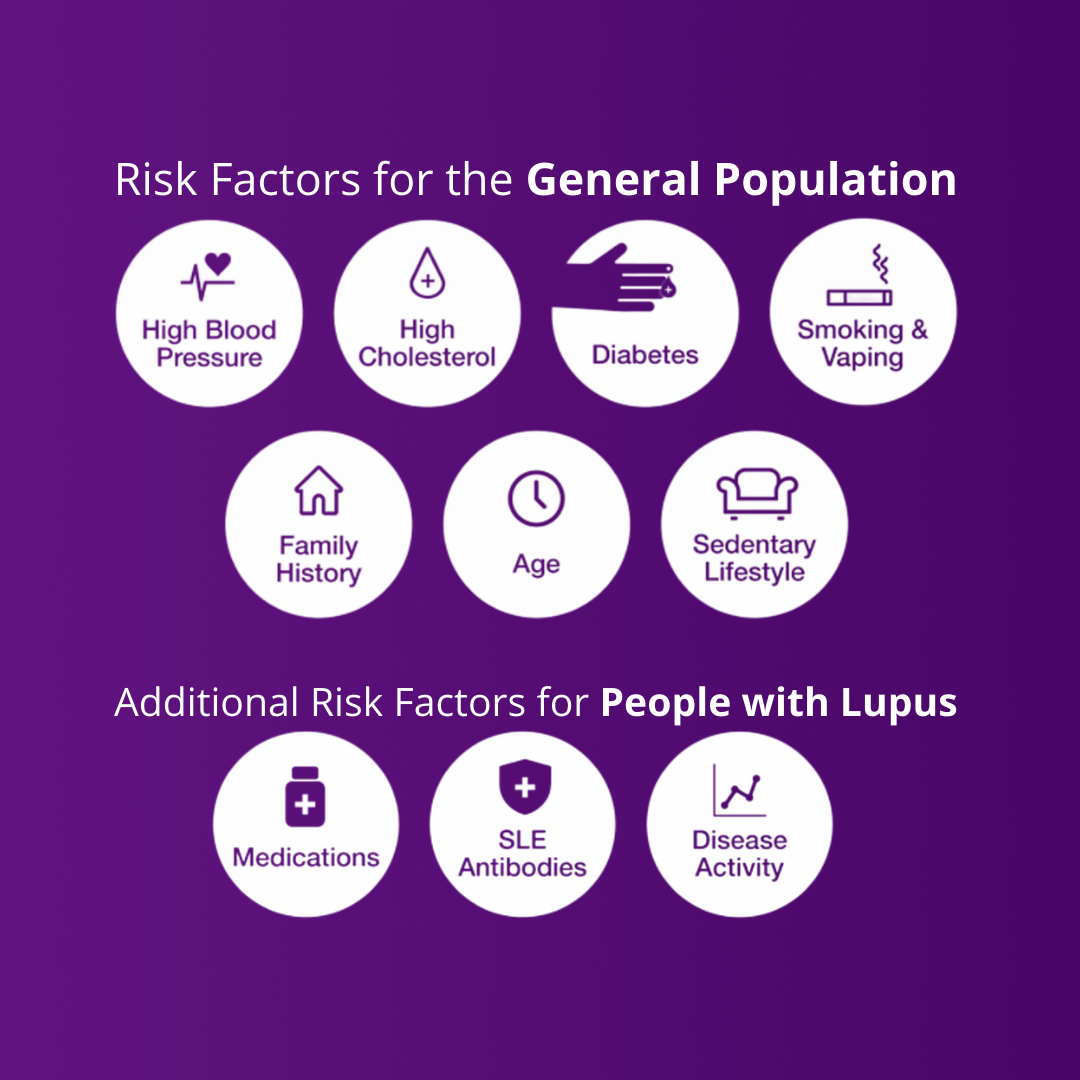
Who May Be at Higher Risk
Certain factors may increase cardiovascular risk further, including:
- High lupus disease activity
- Lupus nephritis
- Family history of cardiovascular disease
- Older age
- Smoking
- Diabetes
- Hypertension
- Racial and ethnic health disparities
Understanding your individual risk profile can help guide preventive care.
Heart Health Research in Lupus
Promoting cardiovascular health in people living with lupus is an active area of research.
Researchers from the University of Calgary, Harvard, and MIT are currently developing an SLE specific cardiovascular risk calculator. This tool aims to help predict an individual’s risk of cardiovascular disease and support earlier prevention strategies.
Participating in research is one way people living with lupus can contribute to improving outcomes for themselves and others.
To learn more about research opportunities, visit our Research and Clinical Trials section.
Download the Cardiovascular Health & Lupus Resource Guide
In collaboration with HeartLife Foundation and leading Canadian clinician researcher Dr. May Choi, MPH, MD, Lupus Canada supported the development of a comprehensive evidence-based guide on cardiovascular health and systemic lupus erythematosus.
This resource outlines:
- Why people with lupus are at increased cardiovascular risk
- Risk factors unique to lupus
- Evidence based prevention strategies
- Medication considerations
- Ongoing research developments
- National and international support organizations
Developed in Collaboration
This resource was developed from:
Dr. May Choi, MPH, MD
Dr. Susan Elliott, PhD
Emily Shantz, MSc, PhD Candidate
Katherine Buhler, BSc
Christine Sperling, BA, Patient Partner