
Patient Perspectives on Lupus Clinical Trials Participation
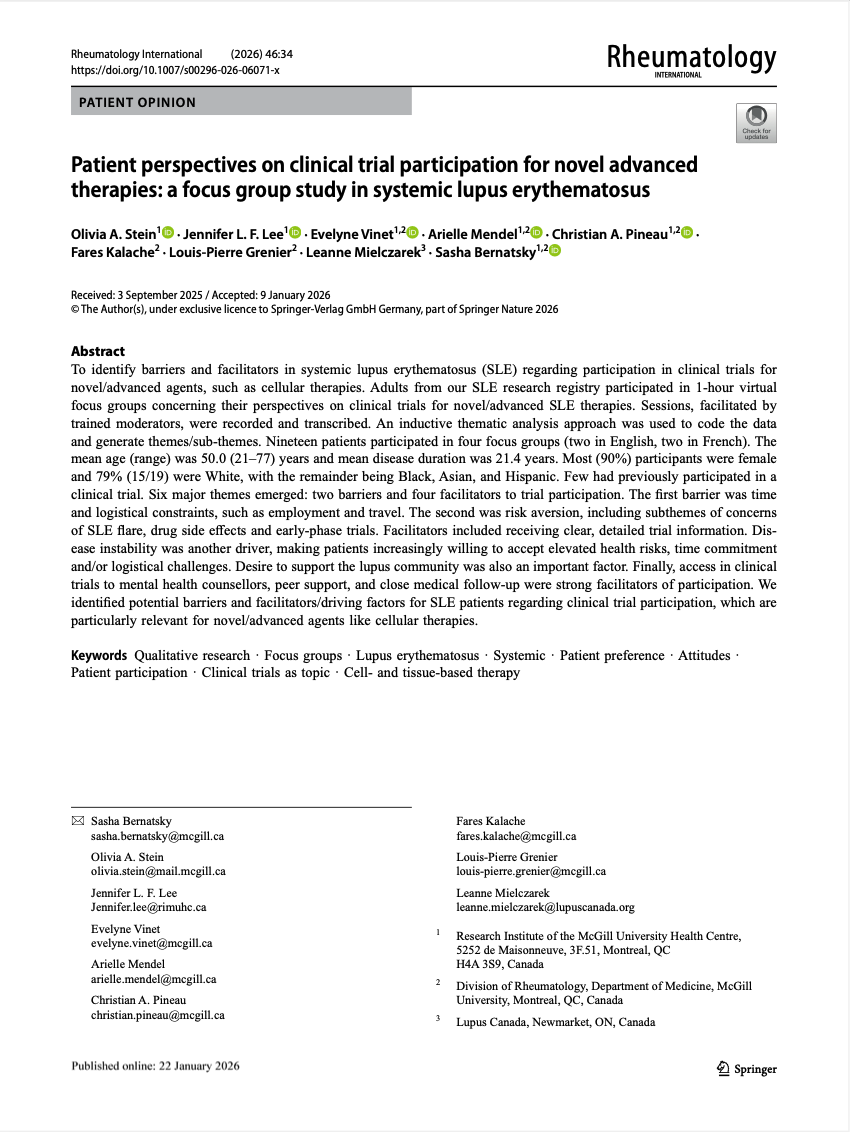
Understanding patient perspectives on lupus clinical trials is essential to improving access, trust, and participation in research. This peer-reviewed focus group study explores how people living with systemic lupus erythematosus (SLE) view participation in clinical trials for novel and advanced therapies, including cellular therapies. The findings highlight key barriers, motivators, and opportunities to make clinical research more patient-centred.
-
Published in: Rheumatology International (2026)
-
Study type: Qualitative focus group study
-
Participants: Adults living with SLE in Canada
-
Languages: English

Overview of the Study
Clinical trials are critical to advancing lupus treatment, particularly as new and advanced therapies continue to emerge. Yet many lupus studies face challenges with recruitment and retention, and patient perspectives on lupus clinical trials are often underexplored.
This peer-reviewed focus group study examined how adults living with systemic lupus erythematosus (SLE) view participation in clinical trials for novel and advanced therapies. Researchers conducted virtual focus groups in English and French with individuals representing a range of ages and disease experiences. Participants shared their concerns, motivations, and support needs related to trial participation.
Analysis of the discussions identified key barriers, including time, travel, employment responsibilities, and concerns about risk or disease flare, alongside factors that may encourage participation. These included clear and accessible trial information, unmet treatment needs, a desire to support the lupus community, and access to medical, mental health, and peer support during a trial.
Key Findings from Patient Perspectives on Lupus Clinical Trials
This study identified six major themes that influence how people living with lupus view participation in clinical trials for advanced therapies:
-
Time and logistics are major barriers. Work commitments, travel distance, frequent visits, and overnight hospital stays often make trial participation difficult or unrealistic.
-
Fear of health risks strongly affects decision-making. Many participants expressed concern about disease flare, side effects, infertility, and the uncertainty of early-phase trials, particularly when their lupus was stable.
-
Clear and detailed information increases willingness to participate. Participants emphasized the importance of transparent explanations about trial procedures, risks, benefits, and expectations to support informed decision-making.
-
Disease instability can motivate participation. People experiencing uncontrolled or worsening lupus were more willing to accept higher risks and greater time commitments in hopes of finding new treatment options.
-
Altruism plays a role, but rarely outweighs personal risk. Many participants wanted to support the lupus community and advance research, though this motivation was often secondary to concerns about personal health and safety.
-
Support systems make a meaningful difference. Access to attentive medical care, mental health support, and peer connections during a trial were viewed as strong facilitators of participation.
Why This Research Matters for People Living with Lupus
Clinical trials play a critical role in advancing lupus treatment, yet many people living with lupus face real and often overlooked barriers to participation. This research brings patient voices directly into conversations about how trials are designed, communicated, and supported. By highlighting practical challenges such as time, travel, and employment, as well as concerns about health risks and disease flare, the study helps make visible the realities patients must weigh when considering trial participation. Importantly, it also identifies opportunities to improve the research experience through clearer information, stronger support systems, and more patient-centred approaches. These insights can help shape clinical trials that are not only scientifically rigorous, but also more accessible, ethical, and responsive to the needs of people living with lupus.
Lupus Canada’s Role in This Research
Lupus Canada contributed to this study through patient engagement and co-authorship, helping ensure that lived experience informed the relevance and interpretation of the research findings. The study was led by academic researchers at the McGill University Health Centre, with collaboration from clinicians and patient partners. This involvement reflects Lupus Canada’s ongoing commitment to amplifying patient perspectives in research and supporting studies that aim to improve how lupus research is designed and communicated.
Publication Details
Stein, O.A., Lee, J.L.F., Vinet, E. et al. Patient perspectives on lupus clinical trials participation for novel advanced therapies: a focus group study in systemic lupus erythematosus. Rheumatol Int 46, 34 (2026). https://doi.org/10.1007/s00296-026-06071-x
Full Publication
For readers interested in reviewing the complete peer-reviewed publication, the full article is available below.